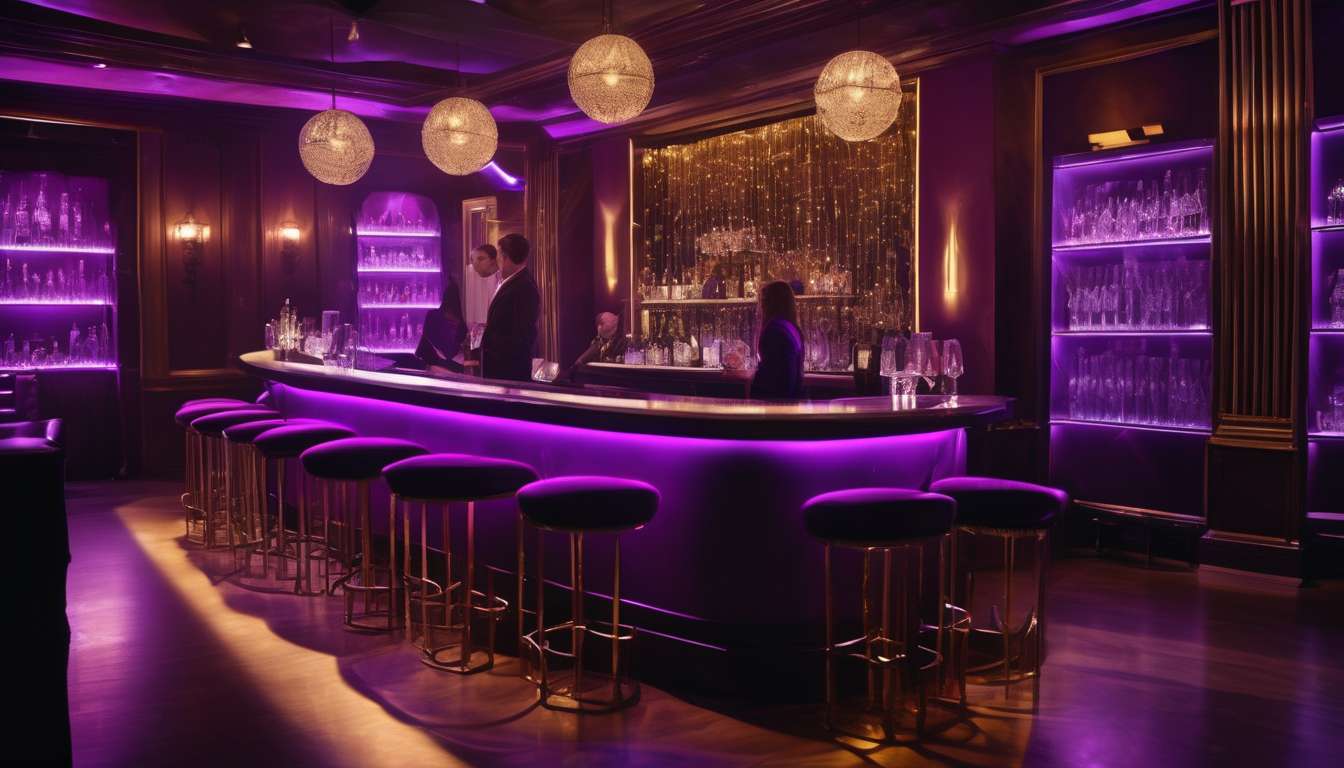
"Good reputations are like stage lights: they reveal what we want the audience to see and hide what we don’t."
We believe that metaphor captures why reputation planning is essential for exotic dancing venues: our brands depend on image, trust, and carefully managed perception.
As operators, performers, and promoters, we understand that a single incident can shift the spotlight and alter community relationships, licensing outcomes, and revenue streams.
We aim to outline proactive steps that protect artistic expression while safeguarding business viability—branding strategies, media protocols, community outreach, and crisis playbooks tailored to our industry’s unique risks.
By treating reputation as an asset to be planned for, not an accident to be reacted to, we can preserve dignity for performers, comply with regulations, and strengthen partnerships with local stakeholders.
This introduction sets the stage for practical, legally aware, and ethically grounded approaches that help exotic dancing venues thrive under public scrutiny.
Brand Identity Mapping
We’ll begin by mapping how your venue’s name, visuals, music, service style, and performer personas communicate a cohesive brand identity to patrons and the surrounding community.
We’ll outline touchpoints where people feel welcomed and seen, so our brand reputation reflects respect, professionalism, and the kind of belonging we want to foster.
We’ll align visual cues, playlist choices, uniforms, and performer introductions so each element reinforces our intended message rather than creating mixed signals.
We’ll also build protocols that connect identity to operational standards:
- How staff greet guests.
- How performers are introduced.
- How spaces are maintained.
That alignment makes it easier to respond consistently if issues arise, supporting effective crisis management without betraying our values.
Finally, we’ll integrate explicit commitments to performer safety into the identity’s core — it’s not an add-on but a signal to performers and patrons that they’re part of a venue where dignity and accountability matter, strengthening trust and long-term community ties.
Risk Assessment Framework
Risk assessment scope and purpose
To assess potential threats to our venue and people, we’ll identify, prioritize, and document risks across operations, security, legal exposure, and reputational impact.
Mapping scenarios and scoring
We map scenarios that could harm brand reputation or threaten performer safety, then assign likelihood and consequence scores so we focus on what matters most.
Inclusive stakeholder involvement
We involve staff, performers, management, and trusted community members to ensure diverse perspectives and shared ownership.
Controls and detection measures
We’ll build controls and detection measures to catch issues early and contain them, including:
- Clear policies
- Training programs
- Incident logs
- Access protocols
- Legal checklists
Response planning and escalation
For each risk, we’ll define response triggers, roles, and escalation paths that feed into our broader crisis management playbook without duplicating media tactics.
Review cadence and continuous improvement
We’ll review risks quarterly and after any incident, updating mitigation based on lessons learned.
Transparent documentation and team trust
By documenting decisions and outcomes transparently within our team, we strengthen trust and cohesion.
Outcome
This structured, inclusive approach keeps our venue safer, preserves our brand reputation, and affirms that everyone’s wellbeing and belonging are central to how we operate.
Media Response Protocols
When media inquiries arise, we’ll respond quickly with a single, preapproved spokesperson and a clear, factual message that protects people and our values.
We’ll centralize communications so every statement preserves our brand reputation and reinforces trust among staff, performers, and patrons.
Our spokesperson will follow a scripted framework:
- Acknowledge the situation.
- Confirm facts we can verify.
- Outline actions we’re taking.
- Commit to updates.
We’ll avoid speculation, respect privacy, and keep tone calm and inclusive so everyone feels part of our community.
We’ll train spokespeople regularly and run mock interviews to sharpen messaging under pressure, linking media response to broader crisis management plans.
We’ll coordinate with legal and security partners before releasing sensitive details, and we’ll document every interaction to improve future responses.
We’ll include a clear point of contact for performer safety concerns so performers know we prioritize their wellbeing while protecting the venue’s reputation.
Our goal is swift, consistent communication that unites our team and reassures the public.
Performer Safety Standards
We’ll establish clear, enforceable safety standards that protect performers’ physical wellbeing, privacy, and working conditions.
We will set specific protocols so everyone knows what to expect and can count on consistent enforcement:
- Incident reporting
- Security presence
- Lighting and stage inspections
- Private changing areas
We’ll train staff and performers on de-escalation, consent, and emergency response, and link these practices to brand reputation so safety becomes central to how we’re known.
We’ll document policies, provide accessible complaint channels, and ensure timely, impartial investigations that feed into crisis management planning.
We’ll offer routine health resources and boundary-respecting scheduling to reduce burnout and risk.
We’ll measure compliance and share outcomes with our community to build trust, lessen liabilities, and align economic goals with humane treatment.
We’ll involve performers in policy updates, because belonging depends on feeling heard and protected.
Maintaining rigorous performer safety standards isn’t just regulation—it’s the foundation of a resilient venue and a strong, respected brand.
Community Engagement Plans
We’ll build ongoing community engagement plans that invite local residents, businesses, and performers to co-create events, sponsorships, and dialogue. This approach demystifies our work and fosters mutual benefit, encouraging partnership instead of opposition.
We’ll host regular public events — open-house nights, charity fundraisers, and panel discussions — where neighbors and staff share perspectives. These activities strengthen brand reputation through transparency and shared values.
We’ll create advisory circles that include performers and local leaders so decisions reflect diverse needs. These circles will reinforce performer safety as a core commitment.
We’ll publicize safety measures and quick-response protocols to show we prioritize people. Clear communication about safety will reduce rumor and build trust.
We’ll train spokespeople for crisis communication so community members hear calm, consistent, and accurate information fast. This ensures the community feels supported during incidents.
We’ll measure engagement and adjust using surveys and attendance metrics. When feedback indicates gaps, we’ll iterate on programs to improve relevance and impact.
We’ll celebrate community partners publicly by spotlighting collaborative successes. Public recognition will normalize our presence and promote mutual respect.
By centering belonging and clear, accountable outreach, we’ll protect our brand while nurturing a safer, more connected neighborhood.
Regulatory Compliance Checklist
Regulatory compliance checklist
We’ll maintain a clear, itemized regulatory compliance checklist to ensure our venues meet licensing, zoning, health, labor, and safety requirements at all times.
Key elements to record:
- Permits and renewal dates
- Inspection schedules
- Designated staff responsibilities
Purpose:
- Create a shared process that protects brand reputation and ensures accountability.
Physical standards and accessibility
We’ll document operational limits and facility standards to meet local codes and community expectations.
Items to document:
- Noise and occupancy limits
- Restroom and ventilation standards
- Accessible facilities and ADA-related features
Labor, performer, and security records
We’ll keep labor records, wage proofs, and performer agreements updated and prioritize transparency and performer safety.
Steps and documents to maintain:
- Updated labor records and wage documentation.
- Signed performer agreements and relevant credentials.
- Backgrounded security plans and incident reporting channels.
Safety training and equipment
We’ll schedule regular safety drills and equipment checks and assign trained staff to lead responses.
Routine tasks:
- Regular safety drills
- Fire-extinguisher checks
- First-aid kit inventories
- Assign trained staff for emergency response leadership
Health, foodservice, and sanitation
We’ll track health inspections, food-service compliance, and sanitation logs and share summaries with the team to build trust.
Records to maintain and share:
- Health inspection results and corrective actions
- Food-service permits and compliance checks
- Daily/weekly sanitation logs and verification
Integration with crisis management
We’ll integrate compliance monitoring into our broader crisis management framework so we can act fast, stay unified, and safeguard performers and the venue’s long-term reputation.
Note: This outlines structure and monitoring; specific response scripts and operational protocols will be documented separately.
Crisis Playbook Templates
Goal: Create concise, role-specific crisis playbooks for likely venue incidents — step-by-step actions, communication scripts, and escalation triggers.
Structure of each playbook
- Incident definition: Clear description of the incident that activates the playbook.
- Safety-first checklists: Immediate actions to protect performer and patron safety.
- Rapid-notification tree: Who to notify and in what order so nobody hesitates.
Roles and responsibilities
- Manager: Overall incident lead and public-facing decision maker.
- Floor supervisor: On-the-ground coordination, crowd control, and staff direction.
- Security lead: Physical safety, containment, and liaison with local authorities.
- PR contact: Controls external messaging, media engagement, and social channels.
Communication materials
- Templated statements for staff and external media
- Balance transparency with legal and privacy concerns.
- Include scripts for staff-facing announcements and for external press statements.
- Social media do’s and don’ts
- Clear guidance to avoid escalatory language or premature speculation.
Timing benchmarks
- Who speaks within:
- 15 minutes — Immediate safety confirmation and brief holding statement.
- 60 minutes — More detailed internal update and controlled external statement.
- 240 minutes — Full situational update and next steps.
- When to engage legal counsel and local authorities
- Immediately for threats to life or criminal activity.
- Within 60–240 minutes for incidents with potential legal or reputational consequences.
Escalation triggers and drills
- Severity-linked triggers: Simple thresholds that escalate response level and resources.
- Tabletop drills: Regularly scheduled practice sessions to refine actions and scripts.
Outcome: Practical, shared tools that build confidence and belonging across staff, improve crisis responses, and protect both people and the venue’s long‑term reputation.
Reputation Monitoring Tools
Continuous monitoring systems — social listening, review tracking, and local incident alerts — will be set up to catch reputation risks early and guide timely responses.
Dashboards will aggregate key signals so the whole team feels informed and valued:
- Mentions of our brand reputation
- Incidents affecting performer safety
- Local sentiment and trending posts
Alerts will be assigned to specific roles so responses are fast and consistent, with each alert linked to our crisis management playbook and escalation paths.
Tools will be prioritized to filter noise and highlight actionable signals, such as:
- Spikes in negative reviews
- Trending local posts
- Repeated safety complaints
Weekly briefings will keep the team aligned to review trends, adjust messaging templates, and update contact lists.
Measurement and refinement — by tracking response times, sentiment shifts, and resolution outcomes — we will refine thresholds and tactics.
Outcome: That disciplined monitoring helps protect performers, reassure patrons, and sustain the brand reputation we’ve built together.
How can venue owners quantify the return on investment (ROI) from reputation planning efforts specific to exotic dancing venues?
We’ll start by quantifying ROI from reputation planning.
- Track baseline metrics: sales, foot traffic, online reviews.
We’ll implement specific interventions, then measure lifts over time.
- Compare post-intervention metrics to baseline at regular intervals (weekly, monthly, quarterly).
We’ll assign dollar values to the observed improvements.
- Increased covers → additional revenue per cover.
- Higher spend per customer → average check uplift × number of transactions.
- Reduced churn → lifetime value retained.
- Lower marketing costs → savings from improved organic referrals and reviews.
We’ll calculate net gains and express ROI.
- Net gains = total dollar value of improvements − reputation program costs.
- ROI (%) = (Net gains / reputation program costs) × 100.
- Payback period = reputation program costs ÷ monthly net gains.
We’ll share results with our team to refine and celebrate progress.
- Review findings to iterate on interventions.
- Celebrate wins to reinforce behaviors and maintain momentum.
What legal considerations should be made when collecting and using social media posts and images of performers for reputation monitoring?
Legal risks when collecting and using performers’ social posts and images for monitoring
1. Privacy and publicity rights
- Risk of misappropriation of likeness / right of publicity if performers’ images or posts are used beyond monitoring (especially for commercial or promotional purposes) without written permission.
- Risk of disclosure of private facts if monitoring captures non-public, intimate, or sensitive information and that information is published or shared.
2. Consent and permitted use
- Obtain written consent for any use beyond passive monitoring (for example, promotional, advertising, or public-facing displays).
- Consent documents should clearly specify:
-
- the scope of use (monitoring only vs. promotional use),
-
- duration/retention of rights,
-
- whether consent is revocable, and
-
- any compensation or consideration.
-
3. Copyright and platform terms
- Posts and images may be copyrighted by the performer or third parties; copying, storing, or republishing may require permission or a license.
- Platforms’ terms of service can restrict scraping, automated collection, or reuse; noncompliance creates contract liability and potential account suspension.
4. Data protection and privacy laws
- Collecting personal data triggers obligations under laws such as GDPR, CCPA, and other jurisdictions’ privacy statutes: data minimization, lawful basis, transparency notices, purpose limitation, security, and data subject rights.
- If data is transferred across borders, watch for cross-border transfer rules and obligations.
5. Anonymization and aggregation
- Anonymize or aggregate data where possible to reduce privacy risk and regulatory burden.
- Ensure anonymization is robust—re-identification risks can still create liability if data is insufficiently de-identified.
6. Retention and deletion policies
- Keep a clear retention policy aligned with the purpose of collection and legal requirements.
- Provide procedures for deletion or amendment when required by law or by performer request.
7. Security and breach risk
- Implement reasonable technical and organizational measures to protect collected data.
- Prepare incident response and notification plans to meet breach-reporting obligations.
8. Defamation and accuracy
- Monitoring that republishes or highlights posts can create defamation exposure if false, damaging statements are repeated or amplified.
- Verify the accuracy and context before redistributing content.
9. Contracts, takedown, and governance
- Consult counsel to draft performer agreements, platform-compliant collection terms, and robust consent forms.
- Create internal governance: review processes, escalation for sensitive content, and documented takedown/removal procedures.
- Establish clear takedown and correction processes for performers to request removal or to address misuse.
10. Risk mitigation checklist
-
- Obtain written, scope-specific consent for promotional use.
-
- Review and comply with platform terms and copyright requirements.
-
- Apply data minimization, anonymization, and aggregation where feasible.
-
- Draft retention, deletion, and breach-response policies.
-
- Prepare performer agreements and takedown procedures with legal counsel.
-
- Train staff on defamation, privacy, and IP risks.
If you’d like, I can:
- Draft a concise consent clause and key terms to include in performer agreements.
- Create a simple takedown request template and retention policy outline.
- Provide jurisdiction-specific considerations (e.g., GDPR vs. CCPA). Which would be most useful?
How can venues balance promoting individual performers’ personal brands without creating internal competition or contractual disputes?
Goal: Balance promoting performers’ personal brands while avoiding internal competition or contract disputes.
Set clear policies that share promotion opportunities fairly.
Offer tiered marketing plans tied to measurable contributions.
-
- Define tiers (e.g., emerging, core, star) and the marketing resources associated with each.
-
- Set objective metrics for movement between tiers (e.g., audience growth, revenue generated, engagement rates).
-
- Review tier placement on a regular cadence (quarterly or biannual).
Use revenue-sharing or bonus systems so everyone benefits.
-
- Establish transparent formulas for revenue splits and bonus eligibility.
-
- Tie bonuses to team and individual performance metrics to encourage collaboration.
-
- Publish earnings-impact examples so outcomes are predictable.
Include narrow, non-compete boundaries and transparent contracts.
-
- Limit non-competes to reasonable scope, duration, and geography.
-
- Make all contract terms plain-language and accessible.
-
- Provide a contractual review period and negotiation window before signing.
Hold regular team check-ins to ensure alignment, support, and shared pride in success.
-
- Schedule consistent meetings for goal reviews, conflict resolution, and recognition.
-
- Use anonymous feedback tools to surface concerns early.
-
- Celebrate individual and team wins publicly to reinforce collaboration.
Next steps: draft policy and contract templates, define tier metrics, and pilot the program with a small group to refine before full rollout.
Conclusion
You’ve built a reputation plan that protects your exotic dancing venue brand by mapping identity, assessing risks, and preparing media responses.
You’ll keep performers safe, engage the community, and meet regulators with clear standards and checklists.
Use crisis playbooks and monitoring tools to spot issues early and act decisively.
With these measures, you’ll preserve trust, reduce legal exposure, and maintain a strong brand that lets your venue thrive even when challenges arise.