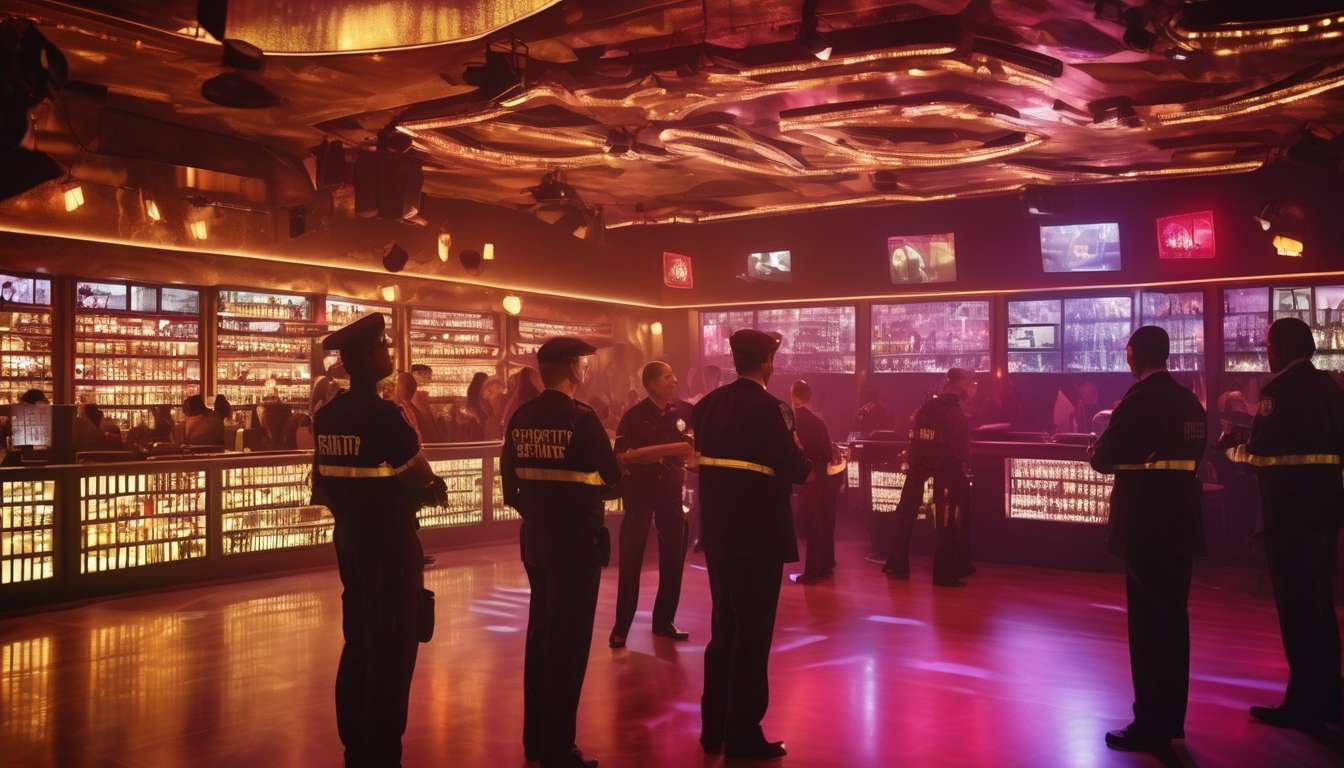
Dancing on a stage and negotiating a workplace code might seem miles apart, yet the parallels are revealing: one relies on choreography and clear signals, the other on defined expectations that protect performers and employers alike.
We have watched clubs evolve from informal spaces into businesses where safety, consent, and professionalism demand explicit rules.
By contrasting the freewheeling image of exotic dancing with the structured demands of regulated workplaces, we see how codes create predictability without stripping agency.
We argue that professional guidelines help performers:
- set boundaries,
- clarify roles,
- and resolve disputes swiftly.
Those same guidelines give managers tools to maintain consistency and legal compliance.
Recognizing this balance reframes exotic dance as a labor sector requiring both creative expression and practical standards.
Throughout this article, we examine how formalized expectations improve dignity, safety, and economic stability for dancers and operators, and why embracing such codes benefits the entire industry.
Industry Context
We work in a service industry shaped by local regulations, venue types, and varying cultural attitudes toward exotic dancing.
We recognize that these external factors create diverse conditions under which we perform, and we rely on shared standards to feel secure and respected.
We insist on clear consent protocols so everyone knows boundaries before any interaction.
We prioritize workplace safety through:
- environmental checks (lighting, exits, hazards),
- incident reporting systems,
- sober designated staff for emergencies.
We champion performer rights, including:
- transparent pay structures,
- control over shifts,
- the ability to refuse requests without retaliation.
We build community by sharing knowledge about:
- local ordinances,
- best practices for de-escalation,
- where to seek legal or medical support.
We value consistent communication with management and peers so issues get addressed quickly and fairly.
We want spaces where dignity and professionalism define our work, where newcomers learn from veterans, and where collective advocacy improves conditions across venues while honoring the variety of experiences we bring.
Purpose of Codes
We create and maintain these codes to set clear expectations, protect our safety and autonomy, and guide consistent responses when issues arise.
We design them so everyone feels included and respected, and we make language plain so it’s easy to use nightly and in training.
These codes outline consent protocols clearly, so interactions stay within agreed boundaries and we all know how to pause, renegotiate, or stop services without stigma.
We center workplace safety in practical steps:
- Lighting
- Buddy systems
- Incident reporting
- Management accountability
All steps are spelled out so nothing’s left to guesswork.
We also document how disputes are handled and how confidentiality is preserved, creating predictable processes that reduce stress.
By having shared rules, we strengthen our community, build trust, and make membership meaningful.
We’re saying that protecting each other isn’t optional — it’s part of our work.
These codes support performer rights while keeping focus on collective wellbeing and everyday operational clarity.
Performer Rights
We assert that everyone who performs here has the right to set boundaries, control their work conditions, and refuse any request without fear of penalty.
We commit to clear performer rights that affirm dignity, agency, and mutual respect.
We expect consent protocols to be explicit, accessible, and consistently enforced.
- Consent protocols must make clear how to grant, withdraw, or document consent.
- Protocols should be easy to find and understand for all members.
- Enforcement mechanisms must be consistent and transparent.
We share responsibility for maintaining fair scheduling, transparent pay practices, and predictable role expectations so members feel included and valued.
- Fair scheduling practices that respect availability and avoid last-minute changes.
- Transparent pay practices that explain rates, deductions, and payment timing.
- Predictable role expectations communicated in advance.
We create reporting pathways that are confidential, simple, and supportive, and we guarantee no retaliation for exercising performer rights.
- Confidential options for reporting concerns or violations.
- Clear steps and timelines for how reports are handled.
- Protections and remedies against retaliation.
We train staff and performers on consent protocols and de-escalation so interaction norms are shared and upheld.
- Regular, accessible training sessions.
- Practical de-escalation tools and role-specific guidance.
- Refresher trainings and onboarding for new members.
We welcome feedback and regularly review policies to reflect lived experience and evolving needs.
- Mechanisms for anonymous and named feedback.
- Scheduled policy reviews with community input.
- Iterative updates based on experience and changing needs.
Together, we build a community where asserting boundaries is normalized, rights are protected, and belonging grows from mutual accountability and respect.
Workplace Safety
Venue safety standards and training
We ensure the venue meets clear safety standards, and we train everyone to prevent, respond to, and report hazards or incidents.
Predictable routines and accessibility
We create predictable routines—entrances, exits, lighting, and emergency procedures—so people feel secure and included.
Codes and maintenance
Our codes specify:
- hazard checks,
- incident logs,
- prompt maintenance
to keep the space functional and accessible.
Embedding safety in daily practice
We build community by embedding workplace safety into daily practice through:
- briefings,
- shared responsibility,
- clear reporting lines
so concerns can be raised without fear of reprisal.
Performer rights and protections
We respect performer rights by:
- protecting privacy,
- enforcing anti-harassment measures,
- guaranteeing the right to refuse unsafe situations.
While detailed consent protocols are addressed elsewhere, we affirm that safety policies support those protocols by delineating boundaries and escalation steps.
Documentation, resources, and participation
We document training, provide first-aid resources, and review policies regularly with performers and staff.
By involving everyone in policy development and updates, we strengthen trust, improve compliance, and ensure the venue remains a place where people can work with dignity and mutual care.
Consent Protocols
We establish clear, enforceable rules around agreeing to interactions and performances.
We enable everyone to set boundaries, change their minds, and expect those decisions to be honored. Consent protocols are designed to be simple, verbal or written, and revisitable at any time, so performers and staff feel safe voicing limits without fear.
We prioritize workplace safety through training and immediate response.
All interactions must follow agreed terms, and staff are trained to recognize and respect withdrawal of consent immediately.
We reinforce performer rights through documented policies.
- The right to refuse contact.
- The right to revise consent mid-shift.
- The right to report violations without retaliation.
We support peer backup and neutral witnessing to build trust.
These systems provide real-time support during transactions and foster a sense of belonging.
We keep records confidential but actionable, and we debrief incidents to improve protocols.
Documentation is used to identify gaps and refine consent processes while protecting privacy.
We provide accessible guidance on consent for newcomers.
Clear guidance helps everyone learn how to negotiate, decline, and seek support.
Overall, these measures create a cohesive, respectful environment aligned with shared values.
Management Responsibilities
Manager accountability and support
We’ll ensure managers set clear expectations, model respectful behavior, and are accountable for enforcing policies and supporting performers.
- We will hold managers to measurable standards.
- We will review incidents impartially and document corrective actions.
- We will train leaders on consent protocols so they can recognize boundaries, respond to concerns, and coach staff without judgment.
Transparent working conditions
We’ll maintain transparent schedules, fair compensation practices, and clear signage about performer rights so everyone feels seen and secure.
- Maintain accessible, posted schedules and pay information.
- Provide clear signage outlining performer rights and available supports.
Safety, risk management, and emergency preparedness
We’ll prioritize workplace safety by conducting regular risk assessments, maintaining well-lit workspaces, and ensuring emergency procedures are practiced and accessible.
- Perform routine risk assessments and address hazards promptly.
- Keep workspaces well-lit and regularly inspected.
- Ensure emergency procedures are published, practiced, and easy to find.
Reporting, privacy, and non-retaliation
We’ll create reporting channels that protect privacy and prevent retaliation, and we’ll follow up promptly when issues arise.
- Offer multiple confidential reporting options.
- Implement strong anti-retaliation protections.
- Commit to timely, documented follow-up and remediation.
Participation and continuous improvement
We’ll encourage open dialogue, invite performer input on policy development, and adapt rules when feedback shows gaps.
- Solicit regular performer feedback and include performers in policy reviews.
- Update practices based on evidence and lived experience.
Culture and values
We’ll cultivate a culture where respect, accountability, and solidarity guide daily operations, reinforcing that every performer belongs and has the right to a safe, dignified workplace.
- Promote daily behaviors that reflect those values.
- Recognize and reinforce positive leadership and peer support.
Dispute Resolution
We will resolve disputes quickly, fairly, and transparently.
- We use multiple confidential channels, neutral investigators, and clear timelines so performers and staff can trust the process.
- We offer anonymous reporting, designated ombudspersons, and documented steps so everyone knows where to turn.
- We prioritize consent protocols and workplace safety in every investigation, ensuring allegations are assessed against shared standards rather than rumor.
We commit to safeguarding performer rights throughout intake, investigation, and resolution.
- Participants will be kept informed of status and outcomes.
- Affected people will be offered options for mediation or formal hearings.
- Individuals can choose supportive measures (for example: schedule adjustments or temporary reassignments).
- Investigations are carried out by trained, impartial investigators using evidence-based practices to reduce bias and preserve dignity.
We maintain confidentiality limits and appeal pathways.
- Decisions can be reviewed consistently through established appeal procedures.
- We track trends and feedback to prevent recurrence and strengthen community trust.
By centering transparency, inclusion, and clear remedies, we create a dispute system that reinforces safety, respects consent protocols, and protects performer rights for everyone who belongs here.
Economic Impacts
We’ll assess how compensation structures, tip-sharing rules, and scheduling practices affect performers’ income, financial stability, and long-term career opportunities.
We examine pay models — hourly, commission, and tip-driven — to see who bears risk and how predictable earnings are.
We’re committed to clear consent protocols and workplace safety standards that reduce lost shifts or income due to avoidable incidents.
By clarifying performer rights around breaks, shift guarantees, and transparent fee deductions, we help create steadier paychecks and fairer revenue splits.
We value belonging, so we advocate for collaborative scheduling that balances business needs with personal obligations, which improves retention and career planning.
We recommend written policies on tip pools, manager commissions, and disorderly-cause pay losses so disputes don’t erode trust or finances.
When codes embed consent protocols and explicit protections, performers keep more of their earnings and face fewer interruptions to income.
Solid performer rights combined with safety-focused operations strengthen both individual livelihoods and the venue’s reputation.
How do professional codes address the use of social media by performers and venues?
How codes guide social media conduct for performers and venues
Purpose: Codes set clear expectations so performers, staff, and venues use social media in ways that protect people’s safety, privacy, and reputations while supporting professional promotion.
Privacy and consent:
- Always obtain explicit, informed consent before photographing, recording, or sharing images/videos of patrons or performers.
- Limit sharing of sensitive personal information (contacts, home addresses, private messages).
- Use private or age-gating controls when posting material involving minors or vulnerable people.
Avoiding exploitation and harm:
- Do not post content that sexualizes, shames, bullies, or exploits performers, staff, or patrons.
- Remove or report exploitative or abusive posts promptly.
- Refrain from sharing backstage or private performance content that could endanger individuals or violate contracts.
Tagging and sharing boundaries:
- Tag people only with their permission; respect requests to be untagged.
- Establish venue rules about reposting patron photos (e.g., opt-in vs. opt-out signage or digital consent).
- Maintain control over official channels—use designated accounts for promotions rather than personal profiles when appropriate.
Professional branding and transparency:
- Keep promotional content consistent with the venue’s and performer’s brand and values.
- Disclose paid partnerships, sponsored posts, or promotions clearly and in line with platform and legal requirements.
- Avoid implying endorsements without consent.
Safety and reputation risk management:
- Avoid posting content that could reveal security practices, backstage access points, or personal schedules that increase safety risks.
- Have a protocol for rapid response to PR or safety incidents that originate on social media.
Addressing violations:
- Document the incident (screenshots, timestamps).
- Notify the designated social media or HR contact.
- Apply graduated responses: request removal, issue warnings, suspend posting privileges, or escalate to legal action if needed.
- Provide support to affected individuals (confidential counsel, safety planning, or other resources).
Inclusion and community standards:
- Promote respectful language and representation; avoid stereotypes and exclusionary content.
- Encourage amplification of marginalized voices with consent and fair attribution.
- Regularly review and update the code with input from diverse staff and performers.
Training and enforcement:
- Offer regular training on consent, privacy, brand guidelines, and legal requirements.
- Make the code accessible and visible (on onboarding materials, staff portals, and venue signage).
- Review incidents and policy effectiveness periodically and adjust as needed.
These guidelines create a respectful, transparent, and safer social media environment for performers, staff, and patrons while enabling effective promotion and community engagement.
What guidance exists in codes for performing artists who also work as independent contractors across multiple venues?
We recognize the challenge of juggling independent-contractor gigs across venues, and we want clear guidance that supports our autonomy and community.
Codes usually stress contractual clarity, consistent consent and safety practices, fair pay transparency, nondiscrimination, and conflict-of-interest rules.
-
Contractual clarity:
- Insist on written agreements that specify scope, pay rate, payment timeline, cancellation policies, and deliverables.
- Ensure rights are protected (intellectual property, image release, privacy) and that dispute-resolution paths are defined.
-
Consent and safety practices:
- Maintain consistent consent standards across venues (explicit consent processes, boundaries, and ability to withdraw).
- Adopt shared safety procedures (incident reporting, emergency contacts, and accessibility accommodations).
-
Fair pay transparency:
- Require clear disclosure of compensation and any fees or deductions before work is accepted.
- Encourage standardized invoicing and timely payment terms to reduce payment disputes.
-
Nondiscrimination and conflict of interest:
- Enforce nondiscrimination policies that protect workers regardless of race, gender, disability, sexuality, or other protected characteristics.
- Clarify conflict-of-interest rules to prevent venue practices that undermine workers’ autonomy or favor exclusivity without fair compensation.
They encourage portable recordkeeping, shared safety trainings, and respectful cross-venue communication.
-
Portable recordkeeping:
- Keep personal, transferable records of contracts, incident reports, and payment histories to protect workers when moving between venues.
- Support mutual accountability by making key records available when appropriate and with consent.
-
Shared safety trainings:
- Promote cross-venue training programs on consent, de-escalation, first aid, and accessibility.
- Collectively maintain training documentation so certifications remain valid across sites.
-
Respectful cross-venue communication:
- Foster direct, professional lines of communication between venue staff and contractors to resolve scheduling, safety, and payment issues.
- Encourage respectful information-sharing about known risks or problematic actors while protecting privacy and avoiding defamation.
We should insist on written agreements that protect our rights and enable mutual accountability while preserving our collective belonging.
- Mutual accountability and belonging:
- Use written agreements not to restrict autonomy but to create clear, enforceable expectations that protect everyone.
- Balance individual freedom with community norms by co-creating codes of conduct, dispute processes, and support networks.
- Center inclusion and mutual respect so that contracts and policies strengthen, rather than fragment, the community.
Are there standards in codes for the handling and storage of biometric or identity-verification data collected at hiring or entry?
Question: Do codes set standards for handling biometric or identity-verification data collected at hiring or entry?
Short answer: Yes — codes commonly set specific standards addressing collection, storage, retention, access, and rights related to biometric and identity-verification data.
Key principles commonly found in codes
Minimal collection and clear purpose.
- Collect only the biometric or identity data necessary for the stated hiring or entry purpose.
- Document and communicate a clear purpose statement before collection.
Informed consent and transparency.
- Obtain informed consent where required and explain how the data will be used.
- Provide clear notices to affected individuals, including retention periods and who has access.
Security measures.
- Require strong technical safeguards such as encryption during transmission and at rest.
- Implement access controls and authentication to limit who can view or process the data.
De-identification and anonymization.
- Anonymize or pseudonymize data wherever possible to reduce privacy risk.
- Use identification-only when strictly necessary and justify that choice.
Retention limits and deletion.
- Define and enforce retention schedules that limit how long biometric/identity data are kept.
- Ensure secure deletion or destruction once the data are no longer needed.
Breach response and notification.
- Maintain procedures for detecting and responding to breaches involving biometric data.
- Notify affected individuals and regulators as required by local rules and the code itself.
Rights and remedies for individuals.
- Support individuals’ rights to access, correct, or request deletion of their identity-related data where applicable.
- Provide mechanisms for complaints and remediation.
Privacy-first operational choices.
- Prioritize privacy-preserving alternatives and less intrusive verification methods when feasible.
- Regularly review and update practices to reflect technological and legal developments.
If you’d like, I can:
- Summarize how these principles map to a specific legal regime (e.g., GDPR, CCPA).
- Draft a short sample policy clause for collecting biometric data at hiring.
- Identify technical controls and tools commonly used to meet these standards.
Conclusion
You’re part of an evolving industry where clear professional codes help protect performers, staff, and patrons alike.
By knowing your rights, following safety and consent protocols, and holding management accountable, you contribute to a safer, fairer workplace.
These codes also clarify dispute resolution and economic expectations so you can focus on your work with dignity.
Embracing and enforcing these standards strengthens the whole community and supports sustainable, respectful livelihoods.